
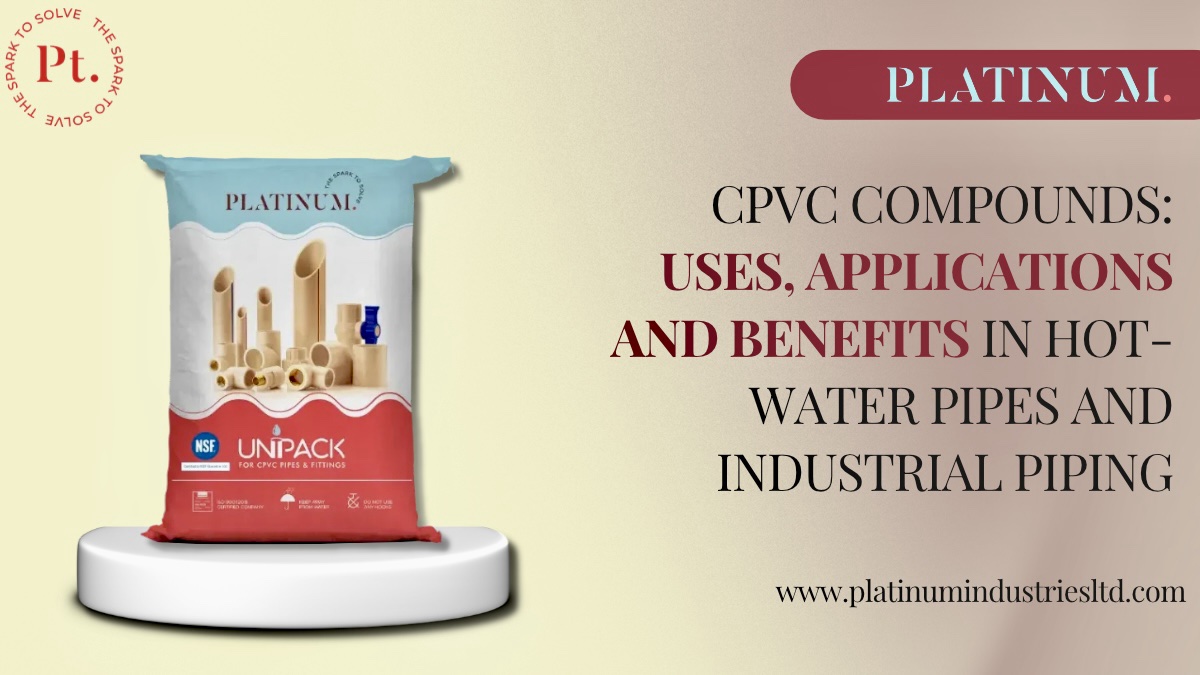
Introduction: Why CPVC Compounds Matter
As buildings get taller, plumbing networks get more complex and industrial processes run hotter and more corrosive, the material inside the pipe matters more than ever. CPVC compounds (chlorinated polyvinyl chloride compounds) have become a leading choice for pipes and fittings that must carry hot water, aggressive chemicals and fire-protection systems reliably for decades.
This guide explains what CPVC compounds are, how they differ from PVC, where they are used, and what to look for when choosing a CPVC compound manufacturer for pipe and fitting production.
What Is a CPVC Compound?
CPVC is made by chlorinating PVC resin, which raises its chlorine content from roughly 57% to about 63–69%. This extra chlorine increases the polymer’s heat resistance, chemical resistance and flame performance.
However, CPVC resin alone cannot be processed into a finished pipe. It must be blended with a carefully balanced formulation, known as a CPVC compound, which typically includes:
- CPVC resin: the base polymer that defines temperature and chemical performance.
- Heat stabilisers: protect the material from thermal degradation during extrusion and injection moulding at high processing temperatures.
- Impact modifiers: improve toughness and prevent brittle failure in installation and service.
- Lubricants and processing aids: ensure smooth melt flow, stable output and a good surface finish.
- Pigments and fillers (where applicable): provide consistent colour and dimensional stability.
The quality of this formulation, and the consistency of each batch, directly determines how well a pipe performs in the field.
CPVC vs PVC: Key Differences
| Property | PVC | CPVC |
| Chlorine content | About 57% | About 63–69% |
| Typical maximum service temperature | About 60°C | Up to about 93°C |
| Hot-water suitability | Not recommended | Excellent |
| Chemical resistance | Good | Very good, especially to acids and oxidising agents |
| Flame performance | Self-extinguishing | Higher limiting oxygen index, low flame spread |
| Processing temperature | Lower | Higher, needs specialized stabilizer systems |
In short, CPVC offers a significant upgrade wherever temperature, chemical exposure or fire safety is a concern.
Key Properties of CPVC Material
Understanding CPVC material uses starts with its core properties:
- High-temperature performance: retains strength and pressure capability at temperatures where standard PVC would soften.
- Corrosion resistance: does not rust, pit or scale, unlike metal pipes, so flow capacity stays consistent over time.
- Chemical resistance: withstands many acids, bases, salts and chlorinated water, including the disinfectants used in municipal supplies.
- Low thermal conductivity: reduces heat loss in hot-water lines and limits condensation on cold lines.
- Flame retardancy: CPVC has a high limiting oxygen index and generates relatively low smoke, which is why it is trusted in fire-protection systems.
- Smooth bore: lowers friction losses and resists biofilm and scale build-up.
- Lightweight and easy to install: solvent-cement jointing reduces labour time compared with welded or threaded metal systems.
CPVC Compound Applications
1. CPVC Hot Water Pipes
The most widespread use of CPVC is in hot and cold water distribution for homes, hotels, hospitals, apartment towers and commercial buildings. CPVC hot water pipes:
- Handle continuous hot-water service while maintaining pressure ratings (for example, standard CTS(Copper tube size) pipe is commonly rated around 400 psi at 23°C and 100 psi at 82°C).
- Do not corrode or leach metals into drinking water.
- Keep water hotter for longer thanks to low thermal conductivity.
- Resist chlorine and chloramine in treated water supplies.
Pipes for potable water are normally produced to recognized standards such as ASTM D2846, ISO 15877 or IS 15778, with compounds tested to relevant drinking-water safety requirements.
2. CPVC Industrial Piping
CPVC industrial piping is widely specified in plants where metal piping would corrode quickly or where thermoplastic piping must handle both heat and chemicals. Typical uses include:
- Chemical processing and transfer lines
- Water and wastewater treatment plants
- Power generation and desalination facilities
- Pulp, paper and textile processing
- Electroplating and metal-finishing lines
- Semiconductor and pharmaceutical utility lines
- Swimming pool, spa and aquaculture systems
In these environments, schedule 80 CPVC pipes and fittings (commonly produced to ASTM F441 and F439) offer a lower lifecycle cost than stainless steel or lined carbon steel in many services.
3. CPVC Fire Sprinkler Pipes
CPVC fire sprinkler pipes are used in residential, hospitality, healthcare and light-hazard commercial buildings. Their advantages include:
- Corrosion resistance inside wet-pipe sprinkler systems
- Low friction loss, which can allow smaller pipe sizes
- Easy, quick installation that is less disruptive in occupied buildings
- Listing and approval under recognised fire-protection programmes and installation standards such as NFPA 13, 13D and 13R
Because sprinkler pipes must perform reliably after years of standing idle, compound quality and long-term hydrostatic strength are critical.
4. Other Applications
- Pipe fittings, valves and manifolds (injection-moulded CPVC compounds)
- Sheets and fabricated tanks for corrosive liquids
- Solar water-heating connections
- Laboratory and HVAC condensate and chilled-water systems
CPVC Pipe Manufacturing: How Compound Quality Affects Production
CPVC pipe manufacturing is more demanding than PVC pipe manufacturing. CPVC has a higher melt viscosity and a narrower processing window, so small variations in the compound can lead to scrap, burn marks or weak pipe.
A typical process looks like this:
- Compounding: resin and additives are precisely dosed, blended and homogenised.
- Extrusion (pipes): the dry-blend or pelletised compound is extruded through a die at controlled temperatures, then sized, cooled and cut. Fittings are produced by injection moulding.
- Quality testing: dimensional checks, hydrostatic pressure tests, impact tests and heat-reversion or thermal-stability tests confirm conformity with the relevant standard.
A well-designed CPVC compound supports:
- Stable, high-speed extrusion with lower rejection rates
- Consistent wall thickness and surface finish
- Strong solvent-cement joints
- Long-term hydrostatic strength and thermal stability
What to Look for in a CPVC Compound Manufacturer
Choosing the right CPVC compound manufacturer is a technical and commercial decision. Evaluate suppliers on:
- Formulation expertise: proven stabilizer, impact-modifiers and lubricant systems for both pipe-grade and fitting-grade compounds.
- Batch-to-batch consistency: tight control of colour, viscosity and thermal stability.
- Compliance: compounds that meet the applicable ASTM, ISO, BIS or NSF requirements for the intended end use.
- Technical support: processing guidance, trial support and troubleshooting for extrusion and moulding lines.
- Supply reliability: dependable lead times, packaging and logistics for continuous production.
- Customization: the ability to tailor grades for specific machines, colours and performance targets.
Benefits of CPVC Compounds at a Glance
- Reliable performance in hot-water and chemical service
- Long service life with minimal maintenance
- Lower installed cost than many metal alternatives
- Reduced risk of leaks, corrosion and scaling
- Fire-safe performance for sprinkler applications
- Light weight, which lowers transport and handling costs
Frequently Asked Questions
What are CPVC compounds used for? CPVC compounds are used to manufacture pipes, fittings, valves and sheets for hot and cold water plumbing, industrial chemical handling, fire sprinkler systems and other high-temperature or corrosive applications.
What is the maximum temperature for CPVC? CPVC is generally rated for continuous service up to about 93°C, although pressure capability decreases as temperature rises. Always follow the pipe manufacturer’s pressure–temperature derating chart.
Is CPVC safe for drinking water? Yes, when the pipe and compound are certified to the applicable potable-water standards. Always verify the certifications for the specific grade being used.
How is CPVC different from PVC? CPVC has a higher chlorine content, giving it better heat resistance, chemical resistance and flame performance than PVC. This allows it to handle hot water and more demanding industrial service.
Can CPVC be used for fire sprinkler systems? Yes. Listed CPVC pipes and fittings are widely used in wet-pipe sprinkler systems in residential and light-hazard occupancies, subject to local codes and approvals.
What should I check before buying CPVC compound? Check the compound’s intended use (pipe or fitting), compliance with standards, processing recommendations, batch consistency and the supplier’s technical support.
Conclusion
CPVC compounds combine heat resistance, chemical durability and fire-safe performance in a lightweight, cost-effective material. Whether the end use is a hot-water network in a high-rise, an industrial process line or a fire sprinkler system, the performance of the final pipe starts with the quality of the compound.
Partnering with an experienced CPVC compound manufacturer helps pipe and fitting producers achieve stable processing, consistent quality and long-term product reliability.
Talk to Platinum Industries Ltd.
Looking for high-quality CPVC compounds for hot-water pipes, industrial piping or fire sprinkler applications? Contact the Platinum Industries Ltd. team to discuss grades, technical specifications and sample requirements.